Sales and Use Tax Filing for Businesses Selling Across State Lines
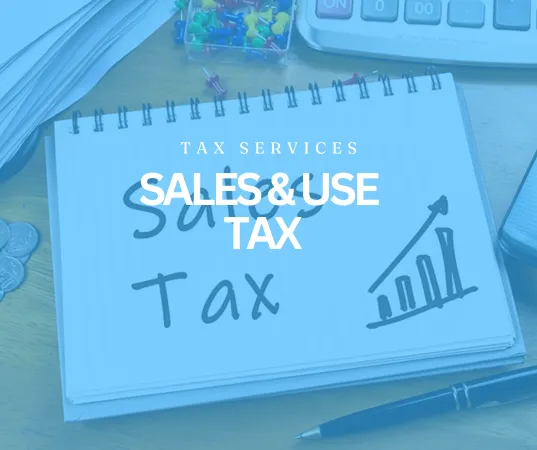
Sales and use tax rules change at every state line: different rates, different permits, different exemption rules. Our sales and use tax services track your nexus, register your permits, and file where you actually owe, so nothing slips through as you sell into new states.
- Home
- Tax Services
- SALES & USE TAX
Most Sales & Use Tax Returns Are Due the 20th
Many states, including Texas, use the 20th of the month following the reporting period for monthly filers. Exact due dates vary by state and filing frequency, we track your specific deadlines for you.
Get Free ConsultationSales and Use Tax Handled Wherever You Sell
Selling across states means sales tax exposure most businesses don’t see coming until a notice arrives. Our sales and use tax consultant works directly with your bookkeeping to track where you’ve crossed a nexus threshold, register the right permits, and keep every state filing current, whether that’s one state or twelve.
HOW IT WORKS
Our Sales and Use Tax Filing Process
Free Consultation & Nexus Review
We review where you have physical presence, inventory, or economic activity to identify every state where you may owe sales and use tax.
Permit Registration
For each state where nexus applies, we register your sales and use tax license or permit, so you're collecting legally from day one.
Exemption Certificate Setup
We help you collect and file the correct resale or exemption certificates from qualifying customers, so you're not paying tax you don't owe either.
Ongoing Filing & Reconciliation
We calculate what's owed in each state, file on the correct schedule, and reconcile against your bookkeeping every period.
Multi-State Monitoring
As you grow into new states, we track new nexus thresholds so you register before a state notices you first.
What Is Sales and Use Tax?
Most people have heard of sales tax. Far fewer know use tax exists at all, even though it's the other half of the same system.
What Sales Tax Is
Sales tax is collected by a seller at the point of sale and remitted to the state. If you buy a taxable item from a business with nexus in your state, sales tax gets added to your bill automatically.
What Use Tax Is
Use tax applies when you buy something without paying sales tax, often from an out-of-state seller, but then use it in a state that would have taxed it. The buyer, not the seller, owes the tax directly.
Why This Matters for Your Business
If you buy equipment, software, or supplies from an out-of-state vendor who didn't charge you sales tax, you may still owe use tax on that purchase in your own state. This is one of the most commonly missed liabilities we find during onboarding, and one states actively audit for.
Sales and Use Tax Rates and Rules by State
Every state sets its own rate, permit process, and exemption rules. Here's what businesses selling into these states need to know. Tap a state to expand it.
Rates and thresholds change. We confirm current figures for your specific states during your consultation rather than relying on a static reference.
OUR TAX SERVICES
The Right Filing Path for Your Business Structure

Individual Tax
Personal returns done right the first time. We handle W-2, 1099, and freelance income while finding every deduction you qualify for.
Business Tax
Filing for LLCs and sole proprietors, simplified. We prepare your Schedule C and keep your quarterly estimates on track.
S-Corp Tax
Entity-level returns that stay compliant with payroll rules. We manage your 1120-S and keep your distributions aligned with IRS requirements.
C-Corp Tax
Corporate tax filing built for accuracy. We handle your 1120 return and keep your business audit-ready year-round.

Partnership Tax
Multiple owners means multiple K-1s. We prepare your Form 1065 and every K-1 so each partner's personal return stays clean.

Sales & Use Tax
Selling across states means sales tax exposure. We track your nexus and file where you owe, so nothing slips through.
Sales and Use Tax License, Permits & Exemption Certificates Explained
These terms get used interchangeably, but they're not the same thing, and using the wrong one can leave you exposed in an audit.
Sales and Use Tax License (Permit)
Also called a permit, seller's permit, or certificate of authority depending on the state. This is what allows your business to legally collect sales tax from customers. You generally can't collect tax without one, and you need it before your first taxable sale in a state where you have nexus.
Resale Certificate
Lets a business buy inventory without paying sales tax itself, because the end customer will be taxed when the item is resold. Used by retailers, wholesalers, and manufacturers buying goods or materials intended for resale.
Exemption Certificate
Used by qualifying buyers, like nonprofits, government agencies, or manufacturers, to purchase items tax-free based on their status or the intended use of the purchase, separate from resale.
Uniform Sales & Use Tax Certificate
The Multistate Tax Commission's Uniform Sales & Use Tax Certificate lets a business claim a resale exemption across multiple states using one form, instead of filing separate state-specific resale certificates everywhere you buy. Not every state accepts it.
Plans & Pricing
Choose the Level of Support Your Sales Tax Footprint Needs
Basic Return
For businesses with nexus in one or two states-
Nexus review for your states
-
Permit registration
-
Monthly or quarterly filing
-
Exemption certificate tracking
-
Email support
Plus Return
For businesses selling in three to ten states-
Everything in Basic
-
Multi-state nexus monitoring
-
Resale and exemption certificate management
-
Bookkeeping reconciliation
-
Priority email and phone support
Premium Return
For businesses with complex, high-volume, or economic nexus across many states-
What is sales and use tax?
-
Registration in new states as thresholds are crossed
-
Audit support and documentation
-
Dedicated tax specialist, year-round
-
Marketplace facilitator reconciliation
FAQs
What is partnership tax?
Sales and use tax refers to two related taxes: sales tax, collected by a seller at the point of sale, and use tax, owed by a buyer when sales tax wasn’t collected on a taxable purchase, often from an out-of-state vendor.
What is the difference between sales and use tax?
Sales tax is collected by the seller at checkout. Use tax is self-reported and paid directly by the buyer when no sales tax was charged, most commonly on out-of-state or online purchases.
What is a sales and use tax return?
A sales and use tax return is the periodic filing (monthly, quarterly, or annual, depending on your volume) where you report taxable sales, tax collected, and any use tax owed, then remit payment to the state.
When is sales and use tax due?
Due dates vary by state and by your assigned filing frequency. Many states, including Texas, use the 20th of the month following the reporting period for monthly filers. We track each state’s specific deadline as part of your filing.
Do I need a sales and use tax license?
Yes, if you have nexus, physical presence or economic activity above a state’s threshold, in that state. You need to register before collecting or before your first taxable sale, depending on the state’s rule.
How do I find my sales and use tax number?
Your sales and use tax number is issued when you register with a state’s Department of Revenue. If you’ve registered before and lost the number, it’s typically retrievable through the same state portal you used to apply, or by contacting the state’s revenue department directly.
How is sales and use tax calculated?
Sales tax is calculated by applying the applicable state and local rate to the taxable sale price. Use tax is calculated the same way, applied to the purchase price of an item that wasn’t taxed at the time of sale.
Is sales and use tax deductible?
For a business, sales tax collected from customers isn’t your expense, it passes through to the state, so it isn’t a deduction. Use tax you pay directly, and any sales tax paid on your own business purchases, can generally be deducted as a business expense.
Is a sales and use tax license the same as a resale certificate?
No. A license allows you to collect tax from your customers. A resale certificate allows you to buy inventory without paying tax yourself, since the end customer will be taxed later. They serve opposite functions.
What is a sales and use tax exemption certificate?
A document that lets a qualifying buyer, like a nonprofit or government agency, purchase items tax-free based on their exempt status, distinct from a resale certificate used for inventory purchases.
What is a Uniform Sales and Use Tax Certificate?
A multistate resale certificate issued by the Multistate Tax Commission that some states accept in place of a state-specific resale certificate, useful for businesses buying inventory across several states.
How do I get a sales and use tax number in Kentucky?
Register through the Kentucky Department of Revenue’s OneStop Business Portal. Kentucky has no local sales tax add-ons, so registration covers the flat statewide 6% rate.
Get in Touch with Us
Ready to simplify your business operations? Reach out today for a free consultation or to book your service. Our team is here to support you every step of the way.
Contact Us
Need Assistance? For any questions or to connect with us directly, please use the contact details below. We’re here to help.
Phone
(929) 924 9287
info@simpleconsultingservices.net
Address
730 N Palora Ave, Yuba City, California
Book Appointment Here!
Please fill the form below to book your free consultation, and we’ll get everything ready to review your business needs.